Many people thinks a Health Savings Account (HSA) to be just a simple healthcare account, but it can be use to pay prescription medicines, doctor visits, dental expenses and other qualified medical expenses. But in reality, HSA isn’t just only an account for paying medical bills. If it is used properly, then HSA can also become one of the most powerful long-term investment and retirement planning tool. Its biggest strength is its unique tax benefits, which help your money to grow over the long-term.
HSA vs FSA: What Is the Difference?
First of all, we have to major difference between HSA vs FSA. FSA stand for Flexible Spending Account is generally used for generally healthcare expenses. According to this plan, unused funds may be subject to “use-it-or-lose-it” rules or limited carryover provisions. But the structure if HSA is totally different. HSA is an individually owned account and generally its balance doen not automatically expire at the end of the year; the funds roll over. Even if you change jobs, the HSA typically remains yours. That’s why HSA can not be viewed just as a healthcare wallet but also as a long-term financial asset.
The Triple Tax Advantage of an HSA
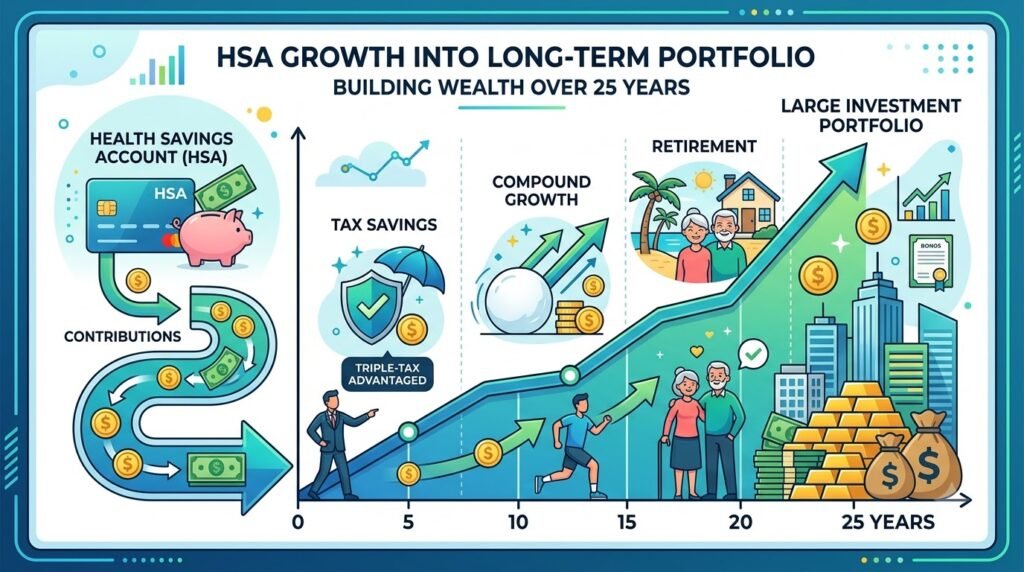
The biggest reason people use an HSA as part of a retirement savings strategy is its triple tax advantage.
1. Tax Advantages on Contributions
Eligible HSA contributions can provide you tax benefit and also help you to reduce your taxable income. According to the sources, the family HSA contribution limit for 2026 is $8,750. If any person falls within the 24% of federal tax bracket and makes maximum contribution, they could realize significant federal tax savings, even before considering applicable state tax treatment.
2. Tax-Free Investment Growth
An HSA can also be invested, depending on the account provider and plan rules. When HSA funds are invested, potential investment gains can grow without annual taxation inside the account. This makes HSA investing especially interesting for people who can afford to leave their healthcare money invested for the long term. The longer the money remains invested, the more opportunity it has to benefit from compound growth.
3. Tax-Free Withdrawals for Qualified Medical Expenses
The third major benefit is that withdrawals used for qualified medical expenses can be tax-free. This combination of tax benefits is why an HSA is often described as having a triple tax advantage.
Should You Invest Your HSA Instead of Spending It?
From this point, HSA strategy become so interesting. Many HSA holders keeps their money in the account’s default cash option. According to data from the different source, only a minority of HSA holder will invest some part of their funds, whereas many accounts remain mostly in cash.
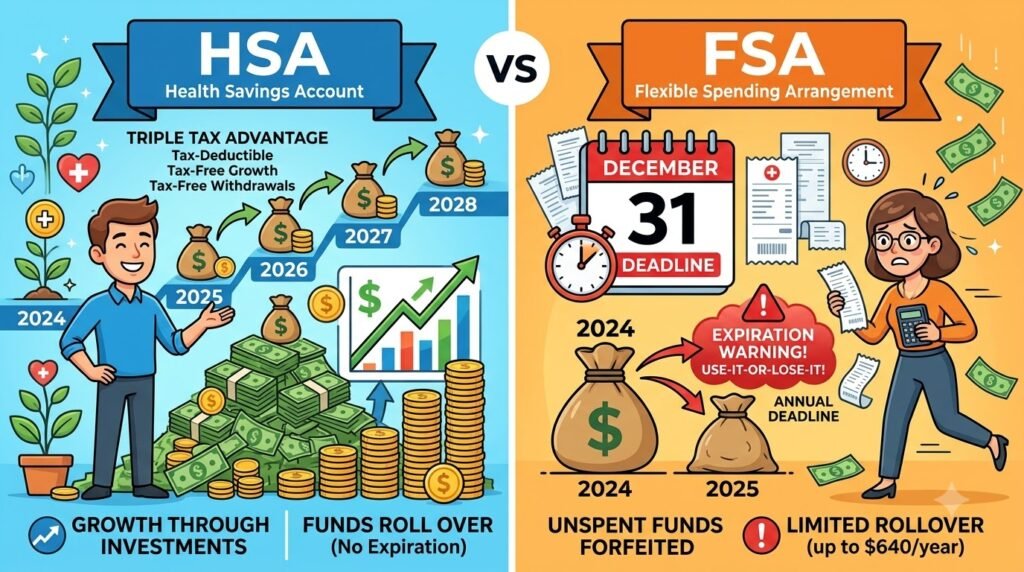
If your HSA provider provides you the investment facility, funds more than the required cash threshold can be invested in broad-market index funds or other available investment options. Because for the long-term investors, the difference is quite significant between the holding cash and investing due to compound interest and market growth.
The HSA Receipt Strategy
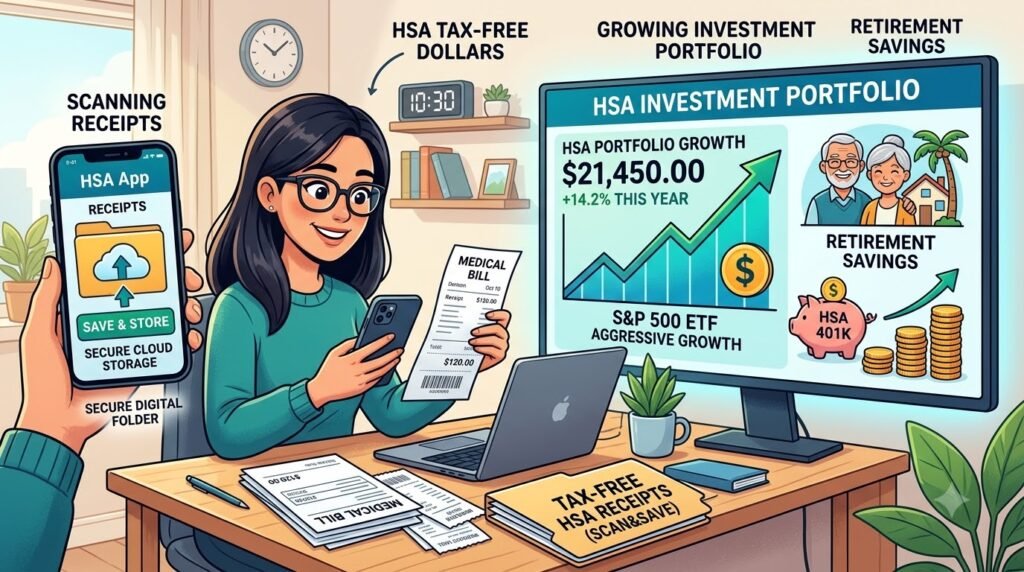
Another powerful HSA strategy involves keeping records of qualified medical expenses that you pay yourself. Instead of immediately reimbursing yourself from the HSA, you can potentially pay a qualified medical bill using personal funds and keep the documentation. Later, you may be able to reimburse yourself from the HSA, provided the expense meets applicable IRS requirements and occurred after the HSA was established. This can allow your HSA money to remain invested for a longer period.
For example, imagine paying a $2,000 qualified medical expense today from your regular bank account. If you maintain the required documentation, you may later seek reimbursement from your HSA under the applicable rules. Good record keeping is essential. Keep itemized receipts and supporting insurance documents and organize them securely. Never rely on memory alone when dealing with tax-advantaged accounts.
What Happens to an HSA After Age 65?
The HSA retirement strategy becomes even more flexible after age 65. According to the source, after age 65, the 20% additional tax that generally applies to non-qualified HSA withdrawals before that age no longer applies. Non-medical withdrawals can instead be subject to ordinary income tax, similar to withdrawals from a traditional retirement account. Qualified medical expenses can continue to receive favorable tax treatment.
This means an HSA can potentially serve two purposes: a tax-free source for eligible healthcare expenses and a retirement asset for other expenses later in life.
Is an HSA Right for Everyone?
Not necessarily. An HSA is generally connected with an eligible high-deductible health plan (HDHP). Before choosing an HDHP simply because of the HSA tax benefits, compare premiums, deductibles, coinsurance, out-of-pocket maximums, employer contributions, and your expected healthcare expenses.
The source also notes that people with frequent medical treatment or expensive recurring healthcare needs should carefully compare their total costs before switching plans.
Final Thoughts
Viewing the Health Savings Account (HSA) only just as a account for paying medical expenses could be a missed opportunity. From its triple advantages, investment options, rollover feature and retirement flexibility, HSA can become an important part of a long-term wealth-building strategy. So the basic idea is very simple, first understand your HSA, after eligible start contributing, and consider investment options for the long term, and also maintain the proper records of qualified medical expenses.
However, tax laws and individual HSA plan rules are subject to change. Therefore, it is important to check the current IRS rules and your specific HSA plan documents before making a financial decision. HSA’s real power may lie not just in spending money, but in providing the opportunity to grow that money over the long term.