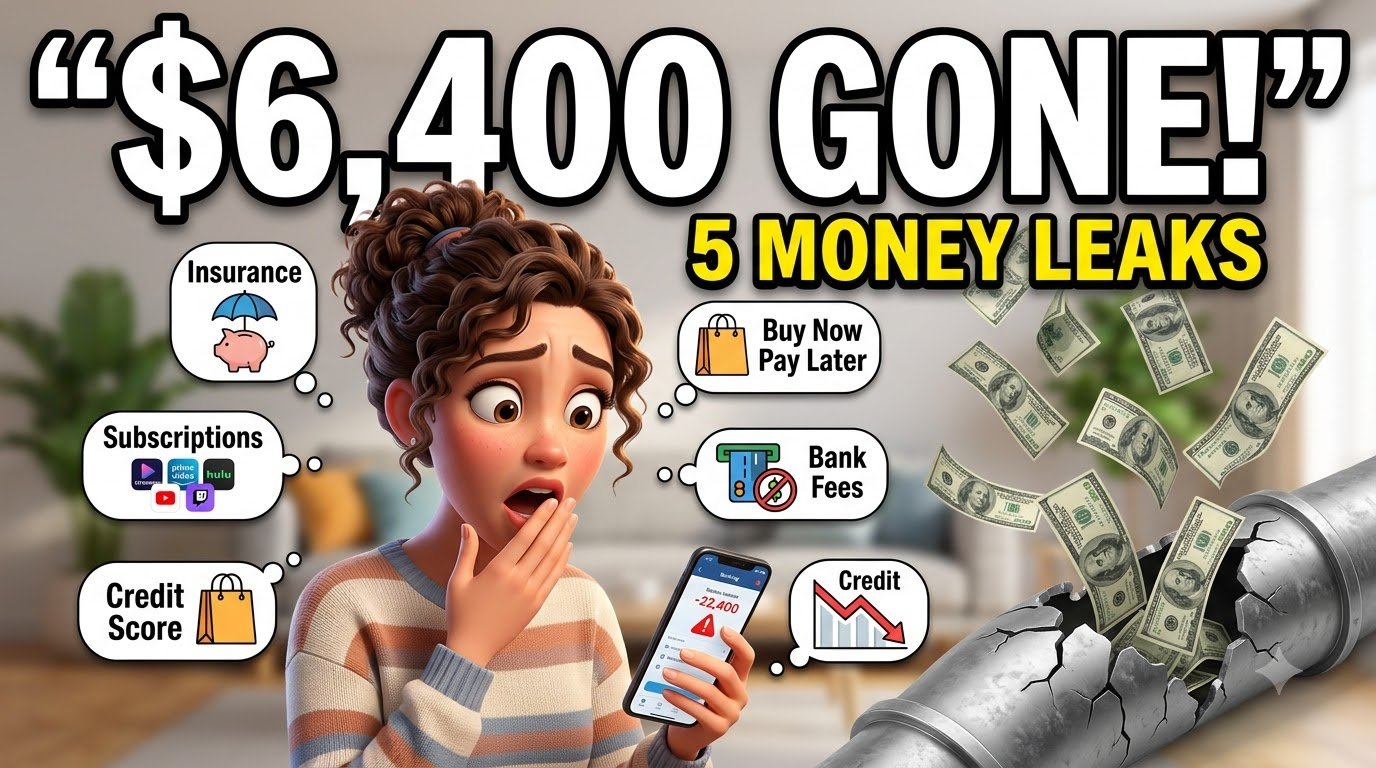
Many people believe the simple formula for saving more money is to earn more, spend less, or invest better. However, the problem isn’t always your income. The real issue lies in those small financial leaks that quietly drain your money month after month without you even noticing.
Let’s see with an example of Allison and Hannah. Both are working in the same hospital billing office for six years. Their salaries were almost the same, their jobs were identical, and their expenses were also quite similar. But by the end of the year, Hannah Hannah had increased her savings by more than $6,000, whereas Allison’s savings remained almost the same. Allison also decides that she is going to audit her personal finance in the same manner as she used to audit other people’s bills. After this, what she discover was surprising. Only due to just five minor financial problems, she lost over $6,400 in a single year. So, here we are going to discuss about the 5 common money mistakes that can also hurt your finances.
1. The Loyalty Tax on Insurance
To remain link with one insurance company may look convenient. Here you knows the company, the policy is already active, and there is also no hassle for the paperwork. But loyalty doesn’t awalys mean lower price. Insurance company sometimes offers attractive rates to the new customers, and premiums may gradually increase at the time of renewal. Many customers simply accepts the higher premium because they do not compare the other options. This approach sometimes called as price optimization.

Here the simple lesson is don’t assume that your current insurance company gives you the best deal. In the avove example, Allison compared a few different insurance quotes and discovered that she could save around $1,100 per year with the similar coverage. This simply means that without changing your lifestyle, you are going to save extra $1,100. One more good habit is to compare car and home insurance quotes at least once a year, especially before renewing your policy.
2. Forgotten Subscriptions
Subscriptions are another common source of wasted money. Streaming services, fitness apps, cloud storage, meal kits, software, meditation apps and other monthly services can seem cheap individually. A $10 or $15 monthly charge may not feel important. But several forgotten subscriptions can become hundreds of dollars every year.
When Allison and her husband reviewed their bank statement line by line, they discovered subscriptions they were barely using. One service had been purchased for a specific event years earlier and was still being charged every month.
The problem was not necessarily overspending. It was not reviewing recurring expenses. Try checking your bank and credit-card statements twice a year. Look for every recurring payment and ask one question: “Would I buy this subscription again today?” If the answer is no, cancel it.
3. Buy Now, Pay Later Can Hide Your Spending
Buy Now, Pay Later, or BNPL, has made shopping feel easier. Instead of paying $100 today, you may see four payments of $25. The total is still $100, but the smaller payment can make the purchase feel cheaper. The problem becomes bigger when several BNPL purchases are running at the same time. You might have one payment for clothing, another for electronics, another for furniture and another for groceries. Individually they look manageable, but together they can create a significant financial burden.
Allison discovered that multiple installment purchases had cost her more than $300 in fees and interest. One simple rule can help: If you cannot comfortably afford the purchase today, splitting it into four payments does not necessarily make it affordable. Before using BNPL, consider the total amount you are committing to—not just the first payment.
4. Overdraft Fees
Small banking fees can also damage your savings. Allison experienced two overdraft charges when automatic payments arrived shortly before her paycheck. Each fee may seem small, but repeated charges can become expensive over time. The bigger issue is that overdraft fees often happen when people have little financial room in their checking accounts.
A simple solution is to create a small checking-account buffer. For example, instead of allowing your account balance to reach nearly zero before payday, try keeping a small amount untouched for unexpected timing differences. You can also connect an eligible backup account or enable low-balance alerts through your bank. The goal is not to become perfect with money. It is to prevent small mistakes from becoming recurring expenses.
5. Your Credit Score Can Affect Your Borrowing Costs
Your credit score isn’t just only a number that you see on a financial app. It also affect interest rates on loans and other forms of credit. Strong credit profile helps the borrowers to qualify for the better rates whereas with a weaker credit profile can lead to higher borrowing costs. This especially become more important when you take out a loan for major purchases, just like a home or a car.

A small difference in interest rate in large loan can can result in a difference of thousands of dollars over the entire term of the loan. That’s why regularly checking your credit report and credit score is a important part of the personal finance management. Pay your bills on time, keep your credit utilization under control, avoid unnecessary new credit applications, and review your credit reports for errors.
The Real Secret Is Scheduling
Here the biggest lesson from Allison and Hannah’s story isn’t that you have to become extremely frugal. The lesson is that it is also important to schedule your financial maintenance. So, set aside a 60–90 minutes once or twice a year for a personal money audit and review these items:
- Insurance premiums
- Bank and credit-card statements
- Recurring subscriptions
- BNPL payments
- Credit score and credit reports
- Banking fees
- Loan interest rates
Here the chances that you might discover that your financial situation is better than you expected. Or, you might find some small money leaks that are draining hundreds or thousands of dollars every year. So, here the important part is to take the action. To improve your finance, you don’t always need a higher salary. Sometimes, the only action you needed is to stop that leaks from where your money is quietly leaking out of your account. The goal isn’t to earn more money overnight; the goal is to ensure that more of the money you are already earning stays with you.