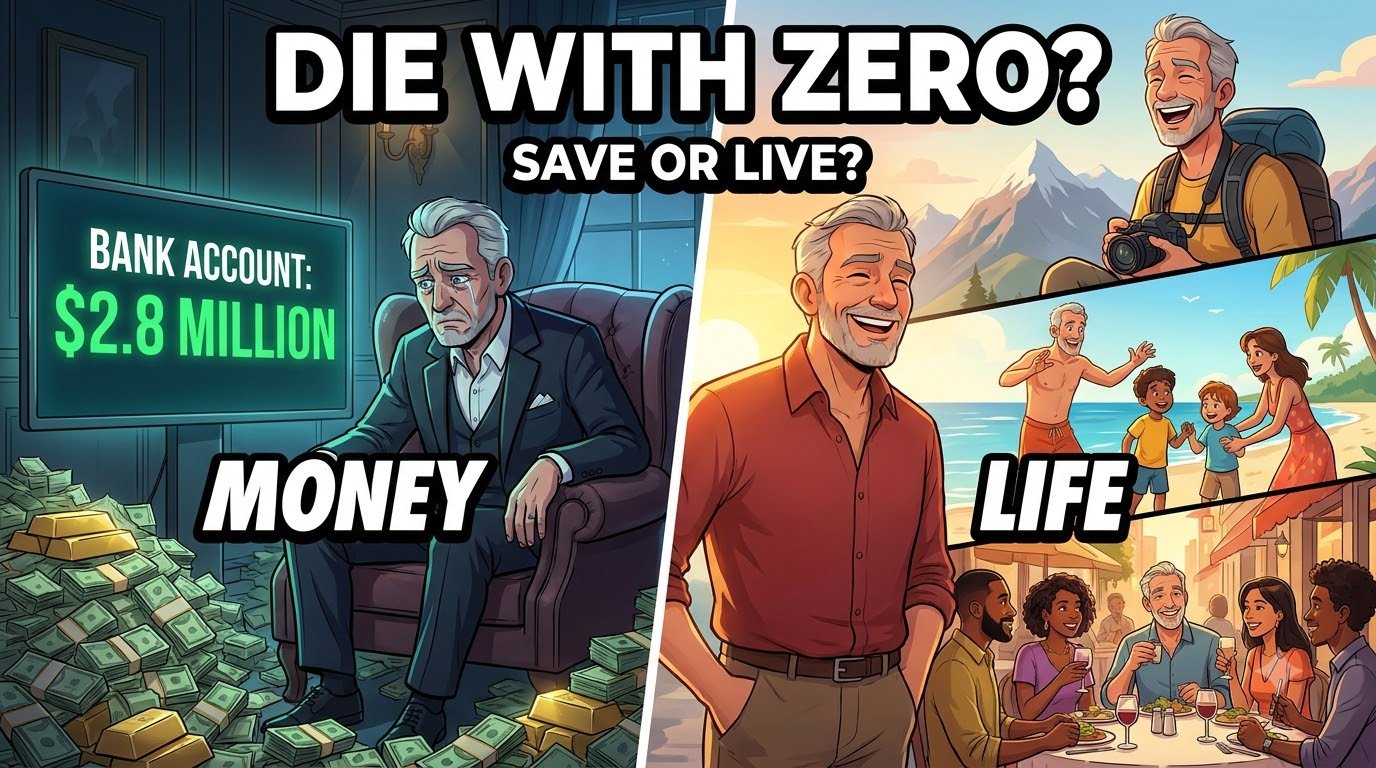
Most of us grow up hearing the same personal finance advice, save money, invest for retirement and avoid the unnecessary spending and build a large net worth. These habits will helps you to create the financial security, But what will happens if by saving a lot of money, you miss the best experiences of your life?
This is the main idea behind the “Die With Zero” which is popularized by Bill Perkins. This doesn’t means that you waste all your money or become financially irresponsible. But instead of that, just ask an important question: What is the purpose of building wealth if you never use it?
The Problem With Saving Everything for Retirement
Just imagine a person named Richard. He works for 45 years, drives used car, lives in a modest house and invest consistently and tries to avoid expensive experiences. When his friends used to travel Europe and enjoy at young their ages, Richard stays in his house and invest his money. While when his family wants to upgrades his kitchen, he simply postponed it for the future.
At the ages of 65, he finally retires with a $2.5 million net worth. According to his traditional financial planning, Richard appears extremely successful. But just after two year of retirement, he suffers a major stroke. For the next few years, he spend much of his time in hospital and also loses the ability to travel and experience enjoyment for which has has waited for 45 years. And when he died, his net worth is about $2.8 million. Here one of the most important question is whether Richard was financially successful. The bigger question is: Did he get the enough benefit from the money he accumulated from the decades. This example explains one of the most important ideas behind Die With Zero philosophy: because money is a tool, not the final goal of life.
Money Is Stored Life Energy
Each and every dollar you earn, represent your some amount of time, effort and energy. If you spend thousands of hours working to earn money but never use those money, then effectively you have exchange a part of your life foe something you have never enjoyed. That’s why Die With Zero philosophy looks at money in a different way. Instead of just asking, “How much money do I have?”, you should also ask: “What am I using my money for which experience and purpose?”
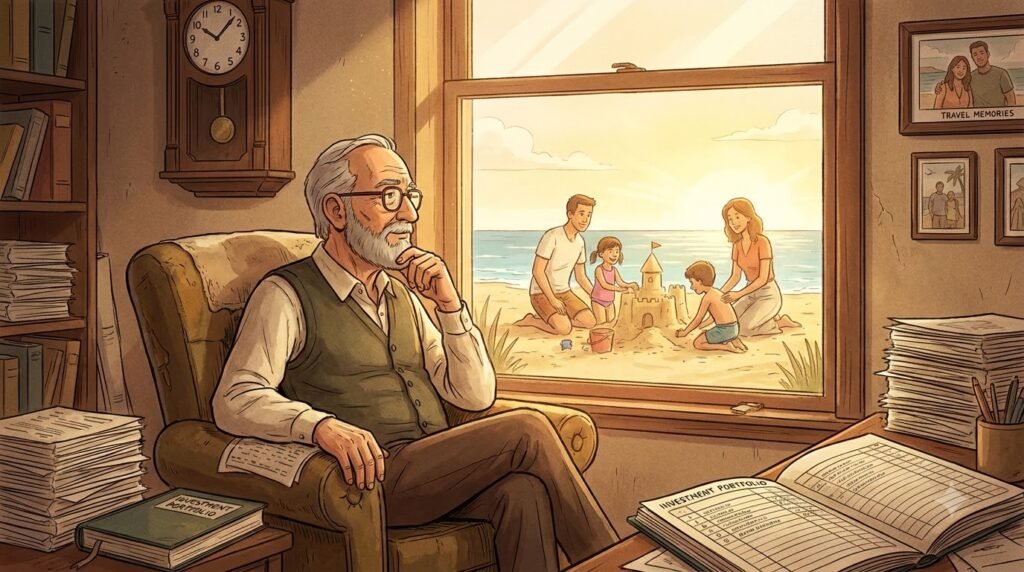
Money helps you to buy your freedom, travel, education, family experiences, hobbies, and time away from work. But the interesting thing is the value of money experience dramatically changes as you get older.
Your Money Has Different Value at Different Ages
One of the strongest arguments for spending money while you are young enough to enjoy it is that your health, time, and money change throughout your life.
Consider three people:
- A 25-year-old may have plenty of health and time but limited money.
- A 45-year-old may have more money and reasonable health but less free time.
- An 85-year-old may have money and time but potentially limited physical ability.
Imagine giving all three people $10,000 for a skiing trip in Switzerland. The 25-year-old may ski, explore, meet new people, and enjoy an exciting adventure. The 45-year-old may still have a great experience but may have work responsibilities and physical limitations. For the 85-year-old, the same $10,000 could provide much less enjoyment. The money has not changed. The person’s ability to convert that money into enjoyment has changed. That is why delaying every experience until retirement can be a risky strategy.
What Are Memory Dividends?
The Die With Zero philosophy introduces another interesting idea: memory dividends. Experiences do not disappear when they are over. A great vacation, family trip, hobby, or adventure can continue giving you happiness for many years. Think about a trip you took years ago. You may still remember the people you were with, the funny moments, the places you visited, and the stories you created. These memories can become more valuable over time.
For example, if you travel at age 25, you may have decades to remember and share that experience. If you wait until age 65, you have fewer years to enjoy those memories. This is why experiences can sometimes have a better long-term return than simply keeping the money in a bank account.
Use Time Buckets Instead of a Bucket List
Many people create a bucket list of things they want to do “someday.” The problem is that someday may arrive when your health, energy, or circumstances have changed.
A better approach is to create time buckets. Divide your life into five-year periods and match your goals to the age when they make the most sense.
For example:
| Age | Possible Experiences |
|---|---|
| 25–35 | Adventure travel, backpacking, extreme sports |
| 35–45 | Family trips, hobbies, children’s activities |
| 45–60 | Longer vacations, personal projects |
| 60–75 | Relaxed travel, reading, learning |
| 75+ | Family time, hobbies, simple experiences |
The goal is to recognize that not every experience can be postponed forever.
What About Running Out of Money?
A common criticism of Die With Zero is: “What if I live longer than expected?”
This concern is completely reasonable. Longevity risk is real.
However, Die With Zero does not mean you should have zero dollars immediately after retirement. The goal is to manage your money so that it supports you throughout your lifetime.
Financial tools such as annuities and long-term care planning can potentially help manage the risk of living longer than expected.
The key is to find your financial safety number—the amount you need to cover essential living costs and future needs. Money beyond that amount can potentially be used for experiences, family, or charitable giving.
Give Money to Your Children When It Matters
Another important part of this philosophy is inheritance. Many parents wants to leave theory wealth as a inheritance property for their children after they die. But just think that if any child received their inheritances property at 60 then its impact will be very limited on his life but same financial help he get at the age of 25 or 30, then it could contribute it towards it a home, education, business, or debt repayment. That’s why Die With Zero philosophy suggests a interesting idea. If you truly want to help your children, then why just to wait until after your death to pass on an inheritance? You can also help them when they needed those money the most and even you will also witness the benefit of those money by yourself.
Final Thoughts: Build a Life, Not Just a Net Worth
The Die With Zero philosophy doesn’t promote the irresponsible spending. This simply reminds that money has a purpose. Saving and investing are important for retirement, but the life is also about the meaningful experiences and relationships which you never get after that time. Your health, time, and ability to enjoy experiences will changes with age. That’s why the perfect financial plan is not necessarily the one that leaves behind the the largest bank balance at the time of death.
Instead, think about your life energy, financial security, experiences, and memories. The goal should not simply be to become the richest person possible. The goal should be to use your money wisely, enjoy meaningful experiences, help your loved ones, and not postpone life’s important moments solely for the “future.”