
Making money in stock market is not that tough as people think. The only problem is to maintain the discipline. Most of the investor lose not because they lack knowledge, but because they keep chasing the big next thing like one day AI, next day Crypto and third day EVs. To follow each and every trend to make fast money in short-term looks little exciting, but to making wealth in long-term is a systematic game. And this systematic game is simplified by “$100 Rule.” This rule is simple and practical investing framework that provides disciplined and stability from the beginners to seasoned traders. or simply we can say in one line — How to start your financial freedom journey just from $100, without any panic and confusion.
🧠 The Harsh Truth: Why Investors Lose!
“Investors usually lose for two reasons — they keep chasing hot stocks, and they lose motivation too soon.” We all start our investing journey with excitement — with YouTube videos, Buffett quotes, and quick profit dreams. After that one dip comes to the market and the portfolio drop to -20% and we starts thinking that Investing is not my cup of tea. And the result is we withdraw all our money and the game is over. But in reality, the market reward only those people who plays by strategy not by emotions. And those investors who wins is the one who builds a “system-following mindset” — and that’s the mindset $100 rule teaches.
💵 The $100 Rule: The Simplest Investing Framework
The rule is very straightforward, “For every $100 rule, you invest, divide into 3 parts — 60-30-10.”
- 60% – For the safe and stable investments (ETFs)
- 30% – For the growth stocks (innovation and future trends)
- 10% – For the dividend stocks (steady income and motivation)
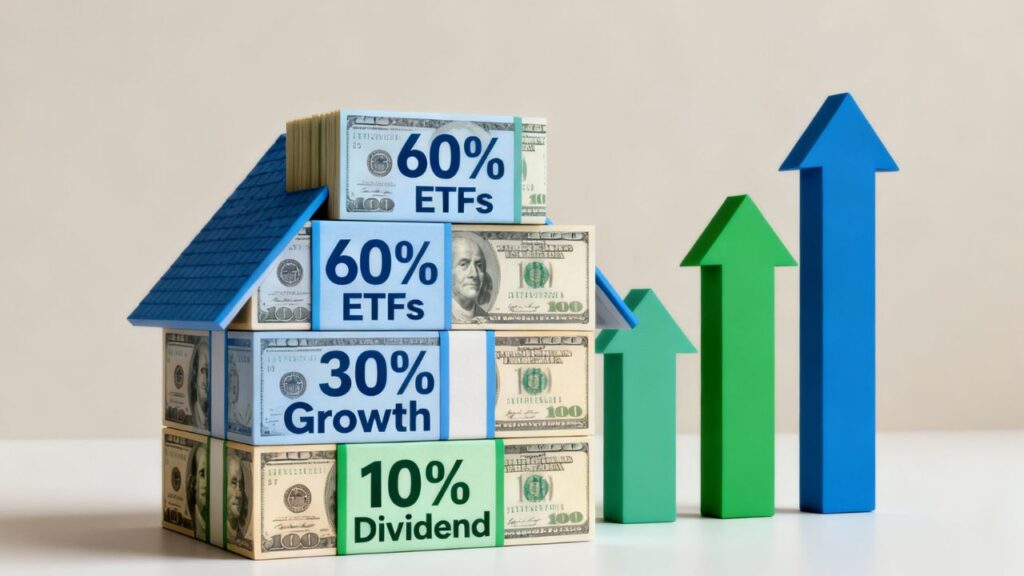
This balance becomes a strong investing “house”— ETFs base foundation, growth section walls, and the motivation roof of the dividend returns. Simply meaning: safety + growth + consistency = long-term wealth.
🏠 Step 1: The Foundation – $60 ETFs Mein
“ETFs are like the foundation of your investing house. You don’t see them moving every day, but they hold everything together.” ETFs (Exchange Traded Funds) are just like a basket that hold the stock from the multiple companies. Buying one ETF simply means you indirectly become the owner of 100–500 companies.
Some great ETF examples:
- SPDR S&P 500 ETF (SPY) – Top 500 companies of U.S. (Apple, Microsoft, Nvidia, Amazon).
- iShares Tech ETF (IGM) – Tech sector exposure.
- SPDR Real Estate ETF (XLRE) – Real estate companies for diversification and inflation protection.
- Vanguard Long-Term Bond Fund (BLV) – Bonds for regular income and safety.
If you have these ETFs during the time of 2020 pandemic crash, your portfolio would have been relatively safe. This is the “peace of mind” section of the portfolio — long-term growth without daily volatility stress.
🚀 Step 2: Growth Stocks – $30 for Innovation & Returns
The second part of the Portfolio is the “Thrill Zone.” Here you get the exposure to innovation and megatrends — in the sectors like AI, Fintech, EVs, Clean Energy, and Cloud Tech. You can also says that Growth stocks are the heroes of the story — the risk is higher, but rewards are also correspondingly higher.
The most recommended growth picks include:
- SMCI, AMD, Symbotic, SoundHound – AI & Automation sector.
- SoFi Technologies (SOFI) – Fintech innovation.
- CrowdStrike (CRWD), Fortinet (FTNT), Zscaler (ZS) – Cybersecurity leaders.
The overall view is the goal is not just to make a profit from each stock but to make profit from the overall balance sheet of your portfolio. If out of 10 stock, 3 stocks fail and 2 stocks give 5x return — The total portfolio still grows. With the smart diversification and patience, you can take market average return from the 12% to 17–18%. In long-term, these small differences will give you early financial freedom.
💸 Step 3: Dividend Stocks – $10 for Stability & Motivation
This $10 become the emotional anchor of your portfolio. The dividend stocks gives you passive income every year— whether the market is up or down. And this income creates a positive feedback loop —And when the return comes in, the motivation increases and you don’t take any break from investing.
Top dividend picks include:
- Schwab Dividend ETF (SCHD) – Stable 4% yield.
- Dividend Aristocrats (NOBL) – 25+ years of continuous dividend growth companies.
Examples: Caterpillar, AbbVie, Walmart.
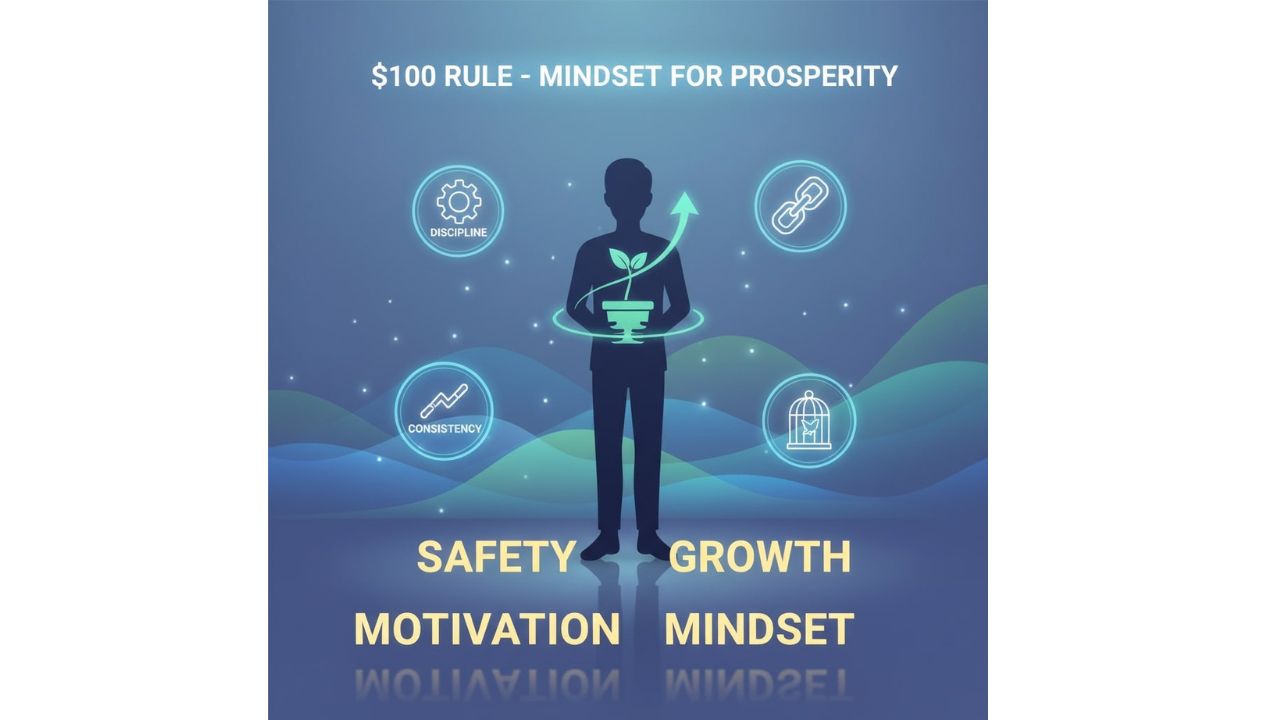
Just think that when the market drops 20%, and still you gets the regular dividend and there is no more any reason to get panic. And these small rewards will keep you disciplined in the “long game”.
🧩 How To Implement The $100 Rule
If you are a beginner, the just keep a simple approach: “For every $100 rule you invest, divide into 3 parts — 60-30-10.”
- $60 – ETFs (foundation)
- $30 – Growth stocks (innovation)
- $10 – Dividend stocks (motivation income)
If you are a existing investor, who already has 50–60 stocks , then the strongest suggestion is that —“Cut your portfolio to your strongest 10–15 growth stocks and 5 solid dividend names. And consolidate the rest into the ETFs.” This will reduce the portfolio stress and increase the stability and also prevent from the over-trading. After sometimes, when you see your portfolio, you will notice the growth at a steady pace — as whether the market is bull or bear.
🔑 Final thought- The Real Secret of the $100 Rule
The magic is not in money — it’s in the mindset. As the overall, we can says that “Winning in the market doesn’t require genius. It requires consistency.” You don’t need to chase each and every stock . Just follow one system that protect you from the fear and greed cycle of the market. For lifetime wealth creation = 60% safety + 30% growth + 10% income. And the formula for successful investing is simple, stress-free, sustainable.